
From Federal to State: Using 45G Rail Credits as a Model for Biofuels
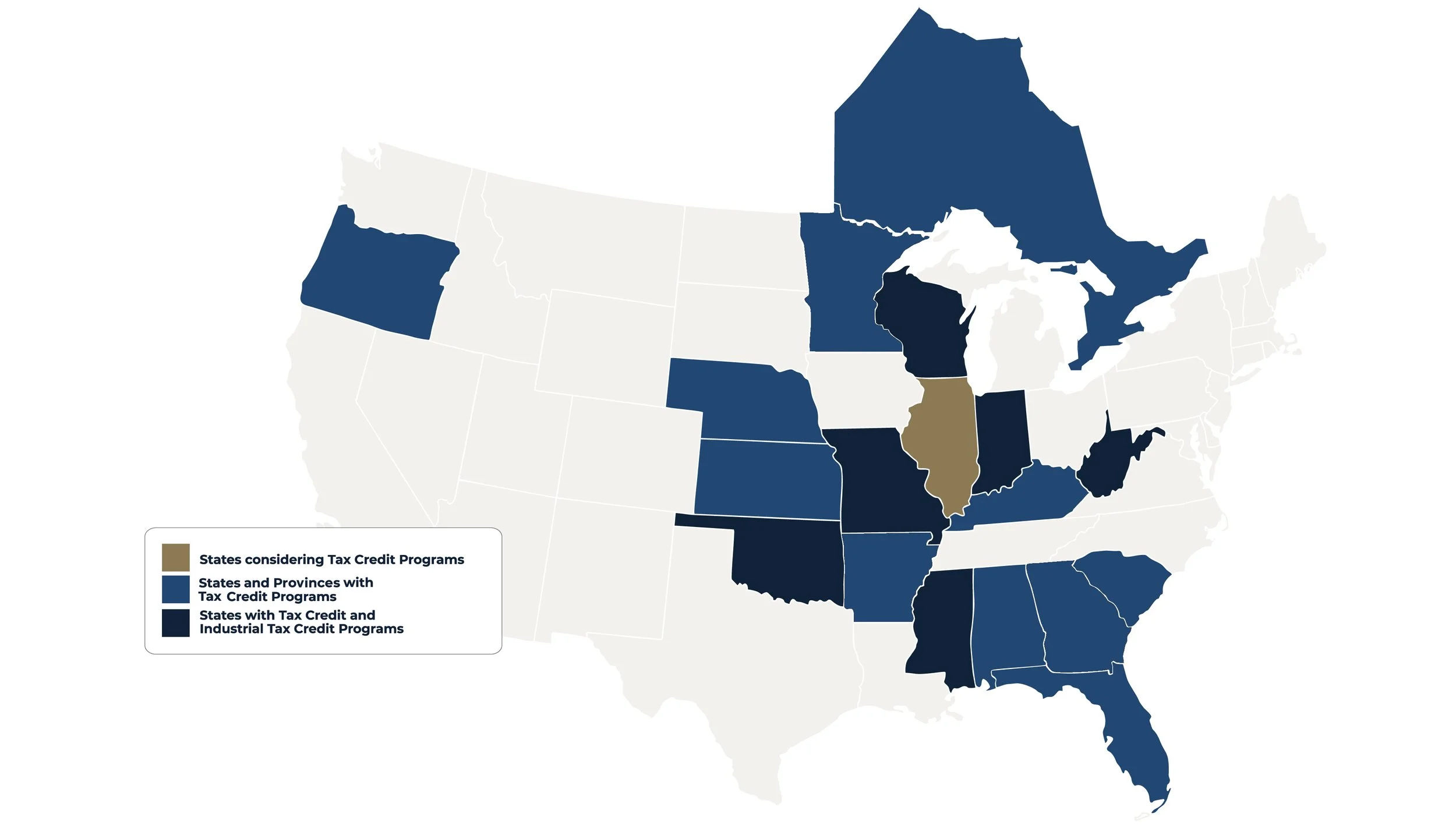
State and Province Railroad Tax Credits – Passed and Prospective
In 2005, the U.S. Congress adopted the Class II and Class III railroad track maintenance tax credit. Designed to support investment in rural low traffic density railroad tracks, the tax credit preserves and improves rail service to agricultural and industrial shippers in rural America by providing a federal tax credit matching 40% of private investment made.
Recognizing the economic development benefits of the rail network, along with the significant capital investment required to maintain railroad track, many states have followed suit. This began with Oklahoma in 2008, followed a few years later by Kentucky. Other state legislatures took note and began adopting their own version of similar railroad and industrial tax credit programs.
The State-Level Domino Effect
Today, 16 U.S. states and one Canadian province have followed suit, including Alabama, Arkansas, Florida, Georgia, Indiana, Kansas, Kentucky, Minnesota, Mississippi, Missouri, Nebraska, Oklahoma, Oregon, South Carolina, West Virginia, Wisconsin, and Ontario.
Expanding rural rail access is a powerful engine for U.S. economic growth, making it deeply popular with workers, voters, legislators, and governors alike.
Replicating the Rail Model for American Biofuels
Following a similar pattern, Congress adopted a biofuels tax credit available to qualifying ethanol, biodiesel and renewable natural gas (dairy digesters) facilities, which took effect in 2025. Since then, Kansas and Kentucky have adopted their own version of similar programs.
Will other states follow suit? Provided these industries continue to strengthen commodity prices and provide good jobs in rural America, the answer seems to be a likely yes.
Contact Mickelson & Company President Mark Mickelson at mark@mickco.com or one of our team members for questions or more information.