
Five Things to Consider in a Tax Credit Transfer
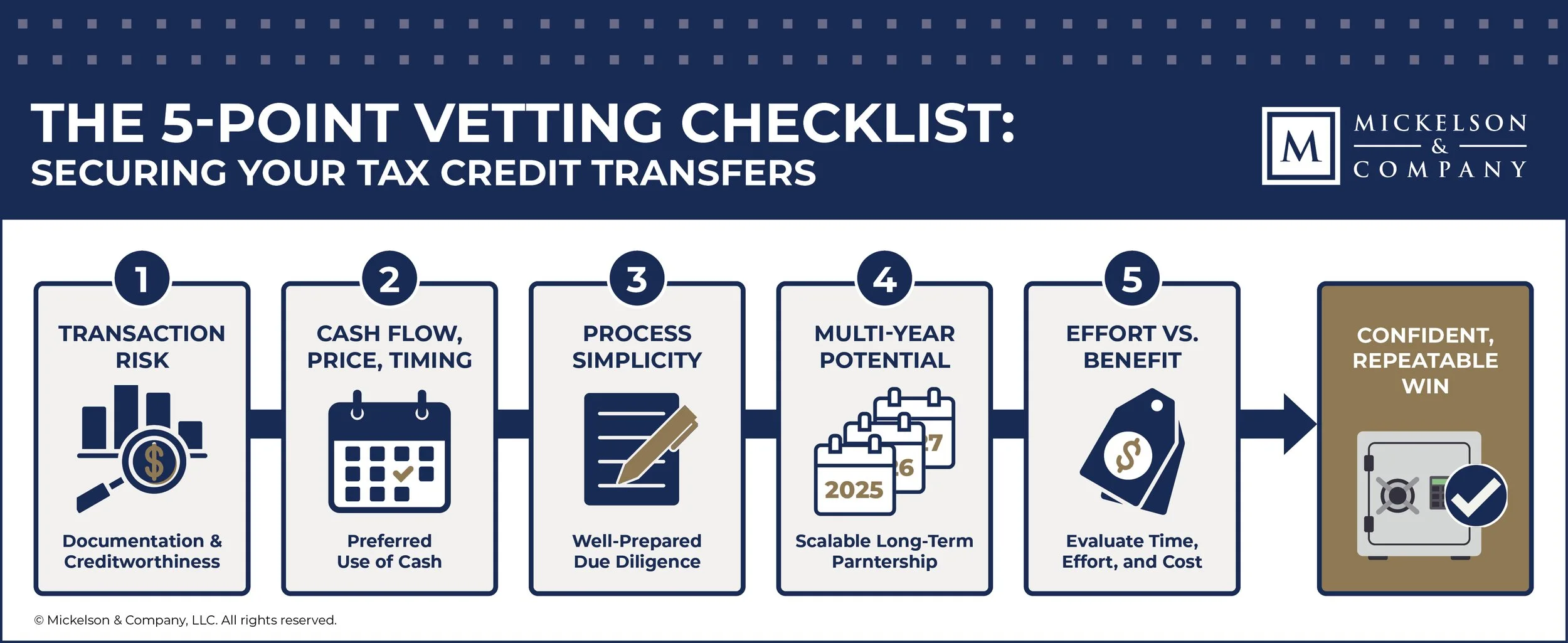
Navigating the landscape of tax credit transfers requires a strategic approach that goes far beyond simply finding the lowest price. For buyers, the process is as much about risk mitigation as it is about financial optimization. Success depends on a thorough evaluation of the seller’s financial stability, transaction documentation, and the overall risk profile of the transaction. By focusing on these key considerations, investors can secure high-quality credits that offer both immediate value and enduring peace of mind.
#1: Transaction Risk
When considering the risk involved in a transaction, corporate buyers should evaluate the quality and completeness of the key transaction documentation and the financial strength and operating history of the seller to ensure the seller can stand behind the indemnity. Reliable due diligence documentation helps mitigate disallowance risk, while seller creditworthiness and insurance provide important protection in the event the IRS later challenges the credit.
#2: Cash Flow, Price, and Timing
For many corporate buyers, it is most advantageous to time the purchase of a tax credit with a quarterly estimated payment. For some, it may be more important to hold cash until after their preferred recording period, and they may be willing to increase pricing to compensate the seller for a delay of payment. Understanding the company’s preferred use of cash is critical to negotiating pricing and timing for payment in a tax credit transfer.
#3: Simplicity of Process
Having the right tax and legal advisors in place on both sides of the transaction is critical to improving the timeline and simplicity of a transaction. Having well-prepared due diligence data rooms and final due diligence documentation available to the buyer is necessary to reduce transaction friction and save time and costs for all parties involved.
#4: Repeatability
With multi-year credits such as the 45Z or 45Y credits, buyers can commit to purchasing a credit amount for multiple years and time the payment of the credits throughout the term of the agreement in a way that is most advantageous to the buyer’s cash flow considerations. This can provide buyers with reduced effort and cost for the same benefit in later years by front loading the due diligence review and agreement negotiation for the first funding date.
#5: Effort vs. Benefit
While tax credit transactions are relatively simple transactions, they still take time, effort, and cost. It is important for a corporate buyer to understand the full extent of the benefits, including the reduction in the corporate effective tax rate.
Ultimately, successfully navigating tax credit transfers is a balancing act between identifying value and managing risk. While price is a significant factor, it is often secondary to the other commercial considerations as outlined here. By carefully vetting transaction opportunities through these five lenses, buyers can move forward with confidence. Taking a holistic, disciplined approach ensures that a tax credit purchase isn't just a one-time win, but a reliable, repeatable component of a sound tax planning strategy.
Please contact Mark Mickelson, President/Founder, at mark@mickco.com or 605-977-4873 ext. 1, or one of our team members if you are interested in learning more about tax credit transfers.
The Company should seek independent legal, tax, and accounting advice as part of this process. Mickelson & Company is not providing legal or accounting services.